
A Guide Neck Pain
A Practical Guide to Understanding and Treating Neck Pain (and knowing when to get help).
If you’re experiencing neck pain, you’re not alone — and you’re not doing anything “wrong”. We see a lot of people in our Baldock and Arlesey clinics with it. Some (stretches you can do at bottom of page)
Neck pain is one of the most common reasons people seek help, especially if they spend time sitting, driving, working at a desk, or feeling stressed or tense.
This guide is here to help you:
Understand why your neck might be painful or stiff
Know what’s safe to try at home
Avoid things that can make pain linger
Recognise when professional support could help
First — A Reassuring Thought
Most neck pain is not serious.
It’s usually related to how the neck has been coping with daily demands over time — rather than a single injury or something being “damaged”.
That said, pain that keeps returning or doesn’t settle is worth paying attention to.
Why Does My Neck Hurt?
Your neck is designed to move freely, but modern life often asks it to stay still for long periods.
Common contributors include:
Sitting at a desk or laptop
Looking down at a phone or tablet
Driving for long periods
Stress and tension
Sleeping in an awkward position
Old strains or injuries that never fully settled
Often, neck pain builds up gradually — you may not notice it until stiffness, aching, or headaches appear.
What You Can Gently Try at Home
If your pain is mild or moderate, and not getting worse, these simple steps can help support recovery.
🌿 Keep things moving
Gentle movement helps reduce stiffness. Slowly turn your head left and right, staying within a comfortable range. A few times a day is enough.
🌿 Change position often
Even “good posture” can become uncomfortable if held too long. Try to change position or move every 30–45 minutes.
🌿 Use warmth for tension
Heat can be soothing for tight or tense muscles — particularly if stress plays a role.
🌿 Support your neck during sleep
Try to keep your neck in a neutral position — not pushed forward or dropped to one side. Pillow height often matters more than firmness.
Things That Often Don’t Help
It’s understandable to want quick relief, but some approaches can actually keep neck pain going.
Try to avoid:
Forcing stretches causing more pain
Repeatedly cracking your own neck
Ignoring pain that keeps returning
Completely resting for long periods
If pain keeps coming back, it’s usually a sign that the underlying cause hasn’t been addressed yet.
When It’s a Good Idea to Seek Help
You might consider a professional assessment if:
Neck pain lasts longer than 1–2 weeks
Pain that keeps returning
Your neck feels increasingly stiff or restricted
Pain which spreads into your shoulder, arm, or upper back
Headaches with neck pain, which are becoming more frequent
Pain which affects your sleep, work, driving, or concentration
Many people decide to seek help when neck pain starts to affect their everyday comfort or confidence in movement.
How Osteopathy Can Support YOUR Neck Pain
Osteopathy looks at how your neck is working in the context of your whole body — not just where it hurts.
Treatment is gentle, it looks at the whole body and is tailored to you. Treatment may involve:
Hands-on techniques to ease tension and improve movement
Looking at related areas such as your upper back or shoulders and even your pelvis.
Clear, practical advice to support your recovery and reduce the recurrence of your neck pain.
The aim is to help you to feel more comfortable, move more freely, and understand what your body needs.
How Long Does Neck Pain Take to Settle?
Everyone is different.
Improvement depends on:
How long the pain has been there
What’s contributing to your pain
Your daily activities and workload
Some people notice changes quickly, while others benefit from a short course of care to achieve more lasting relief.
A Final Reassurance
Neck pain can be frustrating, especially when it keeps returning, but most cases respond well to the right approach.
If your neck pain is limiting your comfort or quality of life, getting it checked can bring clarity and peace of mind, even if only to confirm what’s going on.
There are times where we need to refer you for further medical advice. with neck pain listed below are a few symptoms where you may want to do so:
Neck Pain — When to Seek Medical Advice
Most neck pain is not serious and settles with the right care.
However, please consider seeking medical advice if your neck pain is accompanied by any of the following:
Severe pain after a fall, accident, or injury
Problems with balance, walking, or coordination
Severe and/or unusual headache with neck stiffness
Fever, chills, or feeling unwell alongside neck pain
Night pain that does not ease with changing position
Unexplained weight loss or a history of cancer with new neck pain
If you’re unsure, it’s always okay to seek medical advice for reassurance.
Stretches at Home for Neck Pain
When you have neck pain it is important to encourage movement in a pain free range as previously discussed. As part of this gentle stretching can be really useful.
One thing to consider with these stretches is that it is the forces going through each side of the neck is different which means that the stretch position will be slightly different on each side.
Stretch 1. - The Nucheal Ligament
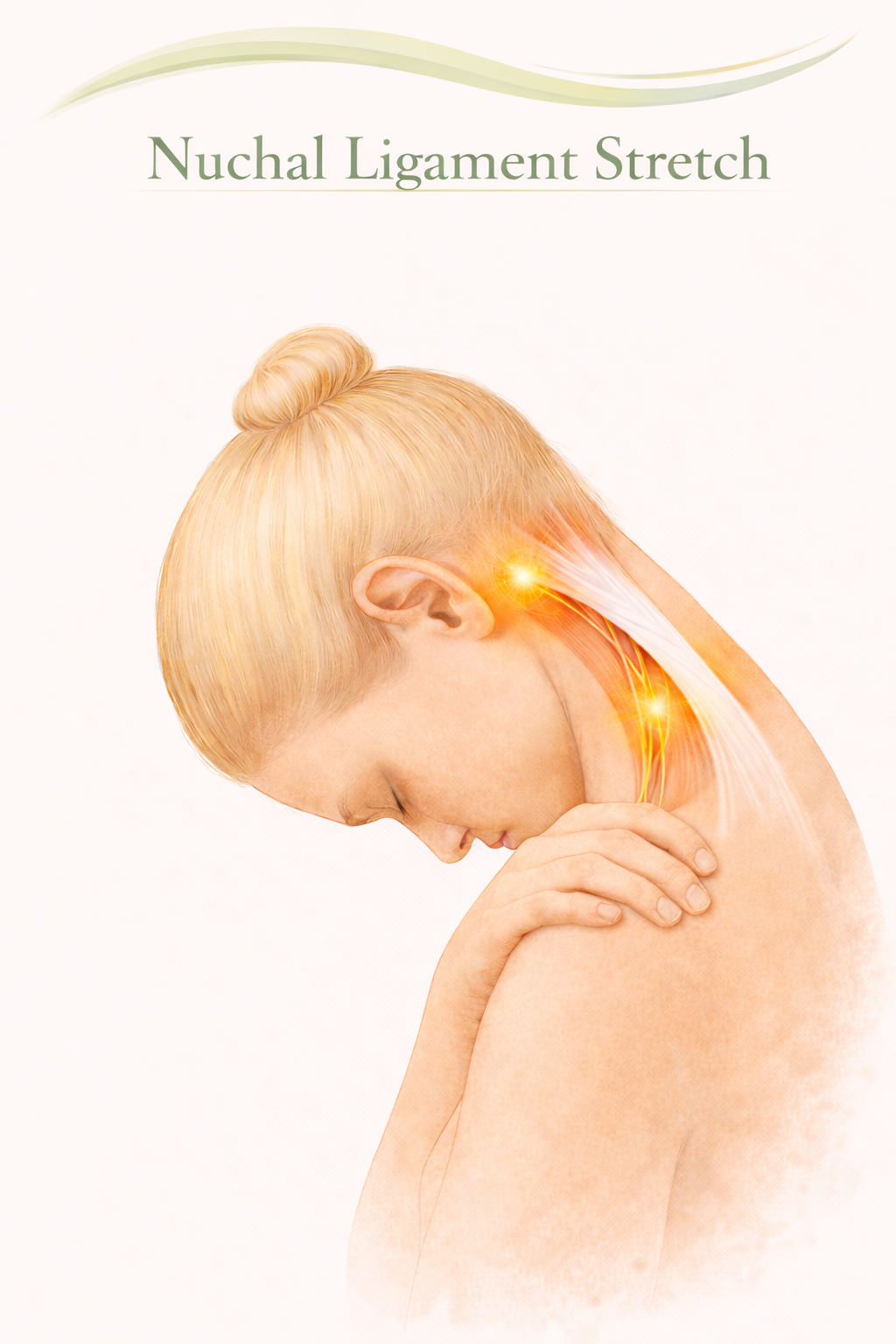
Nucheal ligament stretch can help with neck pain
Sitting down hold each shoulder with the opposite hand (like giving yourself a hug) let your head drop gently forwards. Hold this position for 30 seconds to 1 minute. You may feel a tension or a pull in the middle of the neck which has a vague quality to it. This is because we’re stretching the nuchal ligament which is made up of thicker tissue than muscle.
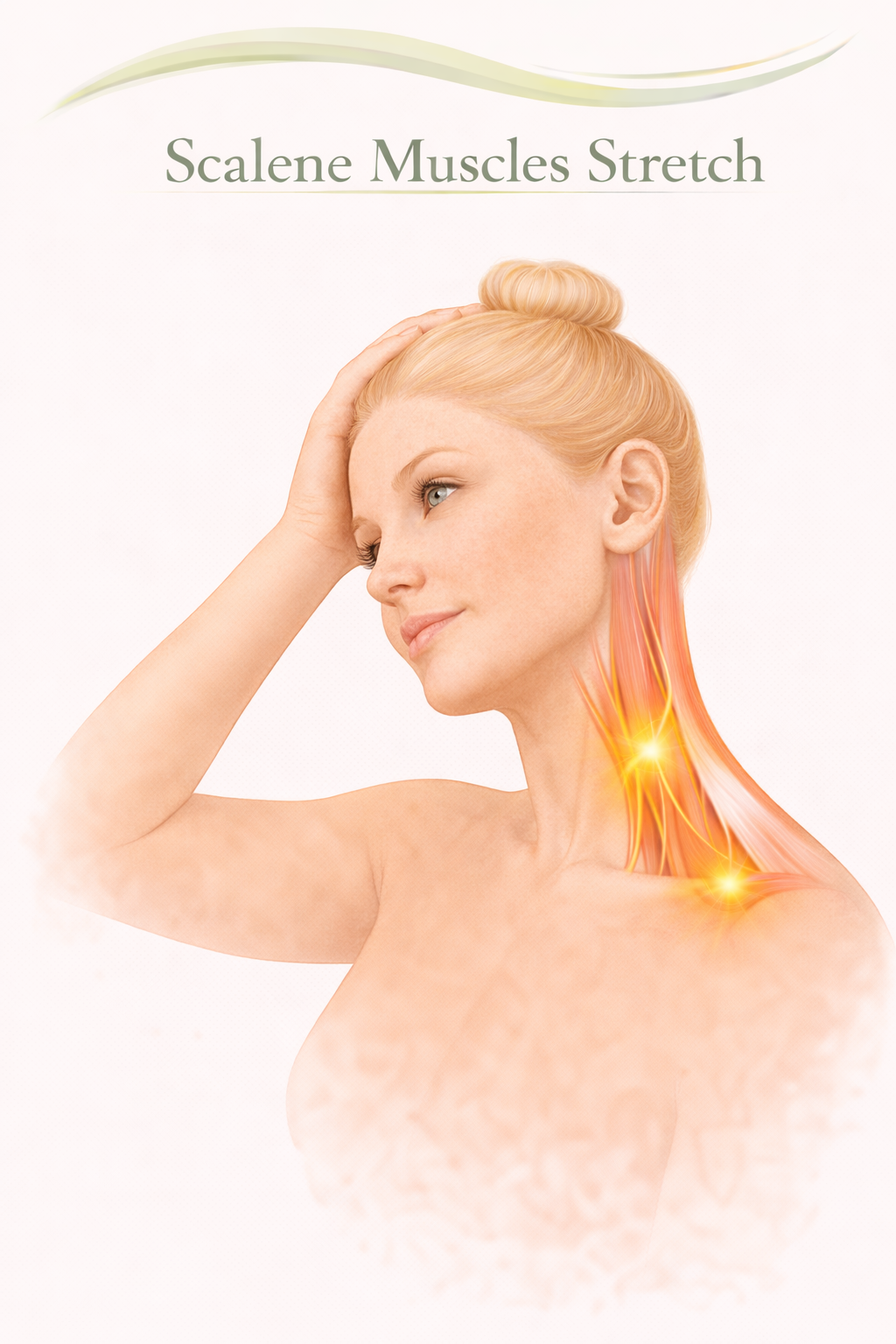
Stretch 2 - Scalene Muscle Stretch
Still sitting down let your head drop to the side (making sure not to feel pain, stretch or tension is OK) don’t force it with your hand. The tension should be in the left or right side of your neck depending on which side your stretching. Sometimes muscles on one side of your neck can be shortened on one side so the range of movement can be different. Hold for 30 seconds to one minute.
We hope these help with your neck pain if you feel you need professional advice please book in to our Baldock or Arlesey clinics. We will provide a personalised treatment plan tailored to you.