
Tension Headache Guide
Most headache is what is called tension-type headache; some people suffer from something different called migraine, though you can get both as well. Long-term headache can be debilitating but usually harmless; however, there are a few kinds of headache where you should seek medical advice before following any of the advice laid out in this guide. This includes:
“Worst headache of my life”, which explodes to maximum intensity within seconds or minutes
Comes with symptoms such as weakness or numbness of the arms, legs or face.
A headache comes along with double vision or vision loss
If there is a fever, night sweats or rash
Headache occurs after head injury (even if minor)
If you are over 50 and have a new severe headache different from usual one.
Remember, if you are worried or anxious, it is always OK, if in doubt, get checked out!
This guide focusses on the majority of people with headaches that come from the neck. This is called tension-type headache. It often feels like a band or vice in the head, you may have tenderness of the scalp and it can last days at a time.
These headaches are often caused by muscles of the neck and or scalp, which manual therapy like Osteopathy may help, but also the gentle exercises and advice included in this guide. These exercises may also help some migraine sufferers who often also experience tension-type headaches. For more specific advice around migraine, please get in contact.
Will Exercise/ Going to the Gym Help ?
Generally, yes, gentle exercise may help, and though it is usually best to avoid running due to the axial loading through the neck in the beginning and some people will struggle with cycling due to the rotatory nature of the movement.
Walking is a great place to start to elevate the heart rate a little bit and get some blood moving into tissues. We recommend that you start with a 10-minute walk once to twice a day.
If you go to the gym, we usually recommend taking 2-3 days off, then if symptoms are at least 50% of what they were going back at around about 30% intensity and volume of the workout you were doing before, basically doing a warm-up and cool-down. If this is ok, gradually ramp up over the next two weeks using your soreness as an indicator of when to step back if needed.
Say, for example, you get some reoccurance of headache/upper neck pain the day after a workout take the next 2 days off, then do the same workout. If soreness (outside of usual DOMS) has gone, continue progressing.
The same logic applies to any classes, such as yoga or pilates; a gentle ramp-up for a couple of weeks before returning to class is advised.
Note: Your highest risk of recurrence is in the first 2 weeks back to your fitness regime, having a ramped programme like this will reduce the likelihood of recurrence/re-injury significantly.
There can be a headache after going to the gym/exercising, called an exertion headache. This is often throbbing in nature and can be down to mild dehydration, so it is important to drink fluids when exercising. Sometimes, if exercise is prolonged (more than 50 mins to 1 hour) or frequent (multiple times a day, or if you have a physical job), then the exertion headache you experience can be due to low blood sugar. If this is the case, then you might find a small amount of banana or electrolyte drink just before or during exercise helps the headache.
What about Ice and Heat?
Both ice and heat can help, depending on how long/often you’ve had a headache. If your upper neck feels tight and or stiff, you may have muscle spasm in which case a gentle heat applied to the area wrapped in a tea towel or some other covering may help to ease it. You may have already found that something like a warm shower helps temporarily, if this is the case.
With heat, it is important to only apply it for 15-20 mins, then let the skin cool down. We find that over-application of heat can lead to congestion of tissues, which over a few days can result in a worsening of pain and/or other symptoms.
If the pain is pinpoint (more localised) in the upper neck, has just come on in the last 24/48 hours or has got worse with applying heat then ice might be beneficial to reduce the inflammation that is there. You or your spouse/partner might notice that the area feels more ‘boggy’ and warm in this case (though not always). Though please note if you’ve had recent trauma to the head and are experiencing headache, it is important to get checked out by a medical professional.
Are There Specific Exercises I Can Do?
Yes! There are some simple stretches you can do that can help tension type headache.
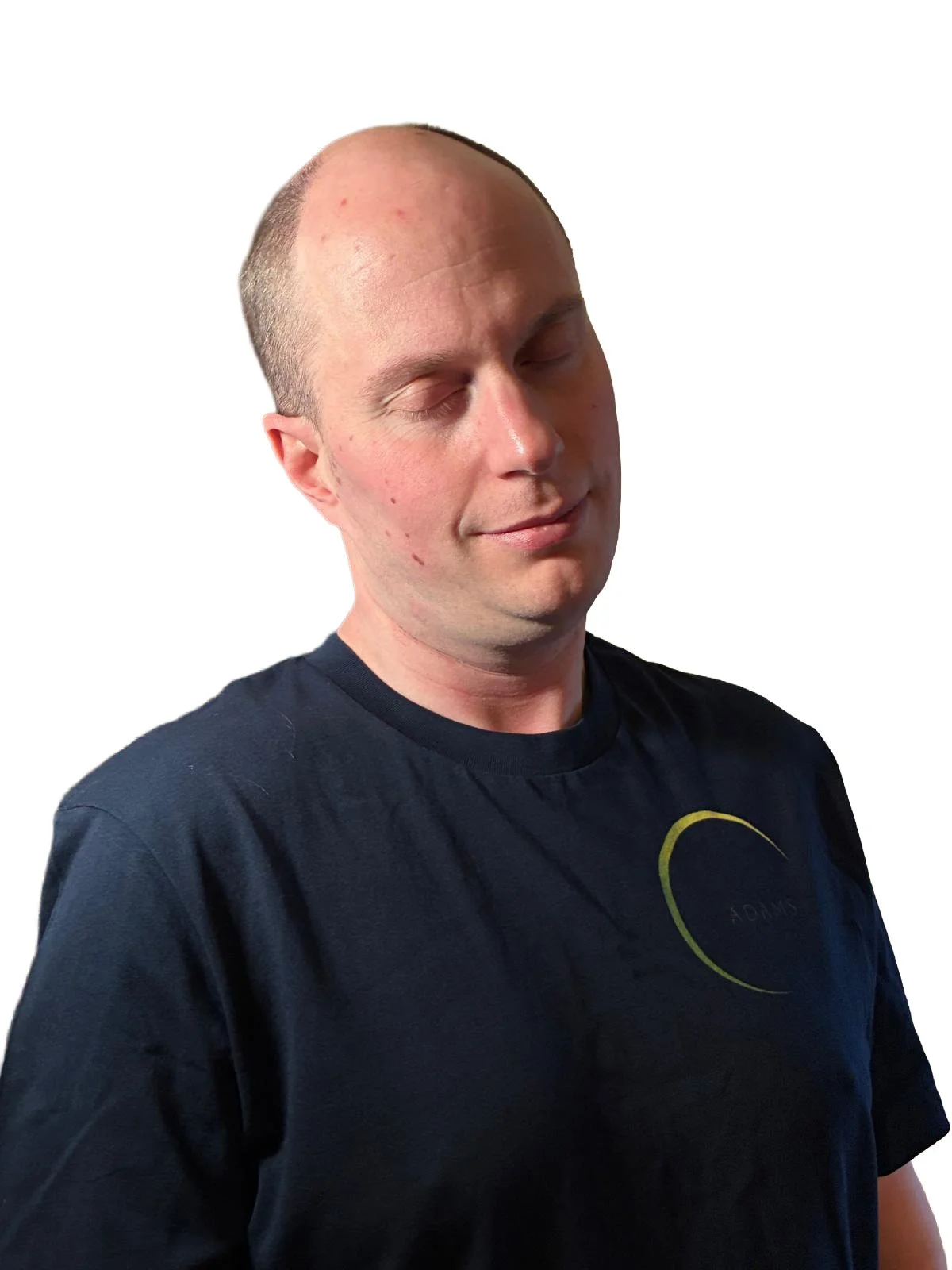
Scalene Stretch
When sitting down, gently side-bend or tilt your head away from the side that feels pain until you feel a stretch or pull sensation (not pain) on the outside of your neck. If 10 was a very strong stretch and 1 barely anything this should be a 2 or 3 on that scale. Hold for 30 seconds and repeat on other side, slowly on and slowly off stretch. If you feel pain reduce the degree of sidebend really strong stretching won’t reduce the pain more.
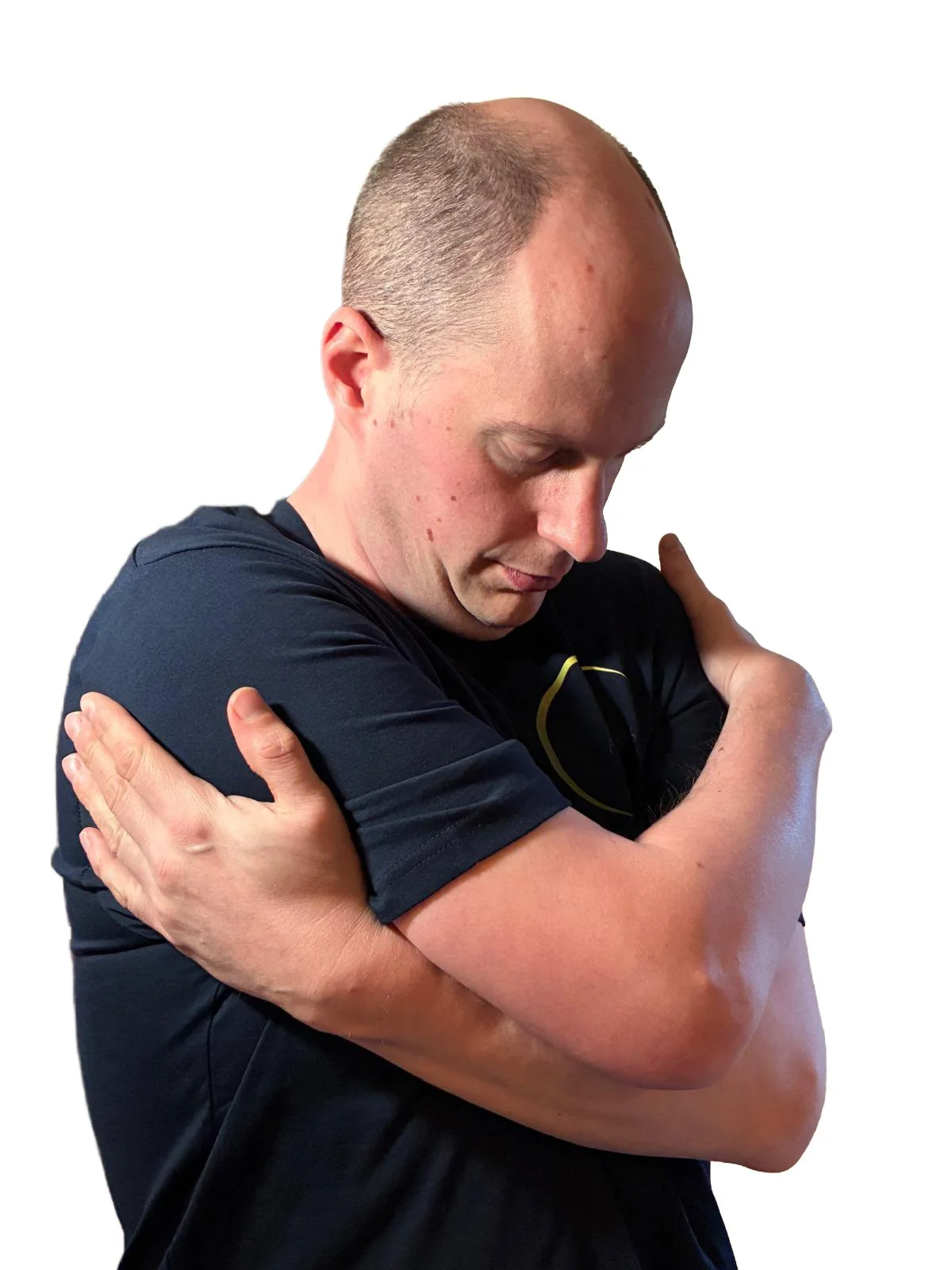
Nucheal Ligament ‘Stretch’
Whilst sitting down, gently hold each shoulder with your opposite arm (give yourself a hug), then let your head drop slowly so it hangs like a heavy weight. Again, there should be no pain if there is a stop. The Nucheal ligament is a thickening of tissue that runs up the middle of the neck and attaches to the base of the skull. As it isn’t a muscle, it doesn’t stretch like a muscle, so you’ll feel a vague pull (if you feel nothing is OK). Hold for 30 seconds to a minute.
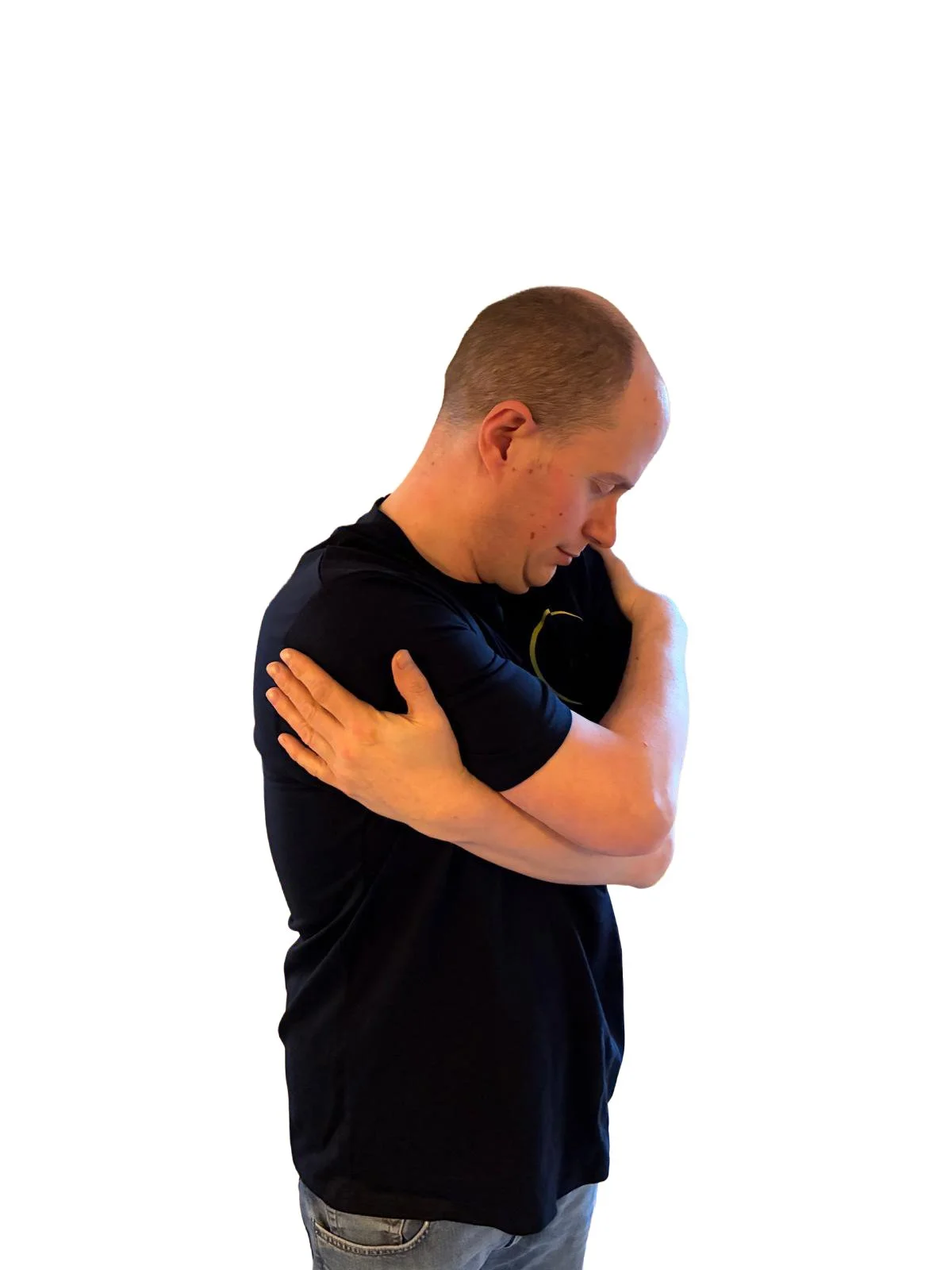
Trapizeus Stretch
In the same position as the Nucheal Ligament, stretch gently, let your head drop to one side, you should feel a stretch in the back of your neck along one side, sometimes into the shoulder hold for 30 seconds to a minute and repeat on the other side. Do 1-2 repetitions of this. As you are stretching the muscle here should feel a lot stronger/different to Nucheal ligament. Aim for a 3-4/10 stretch.
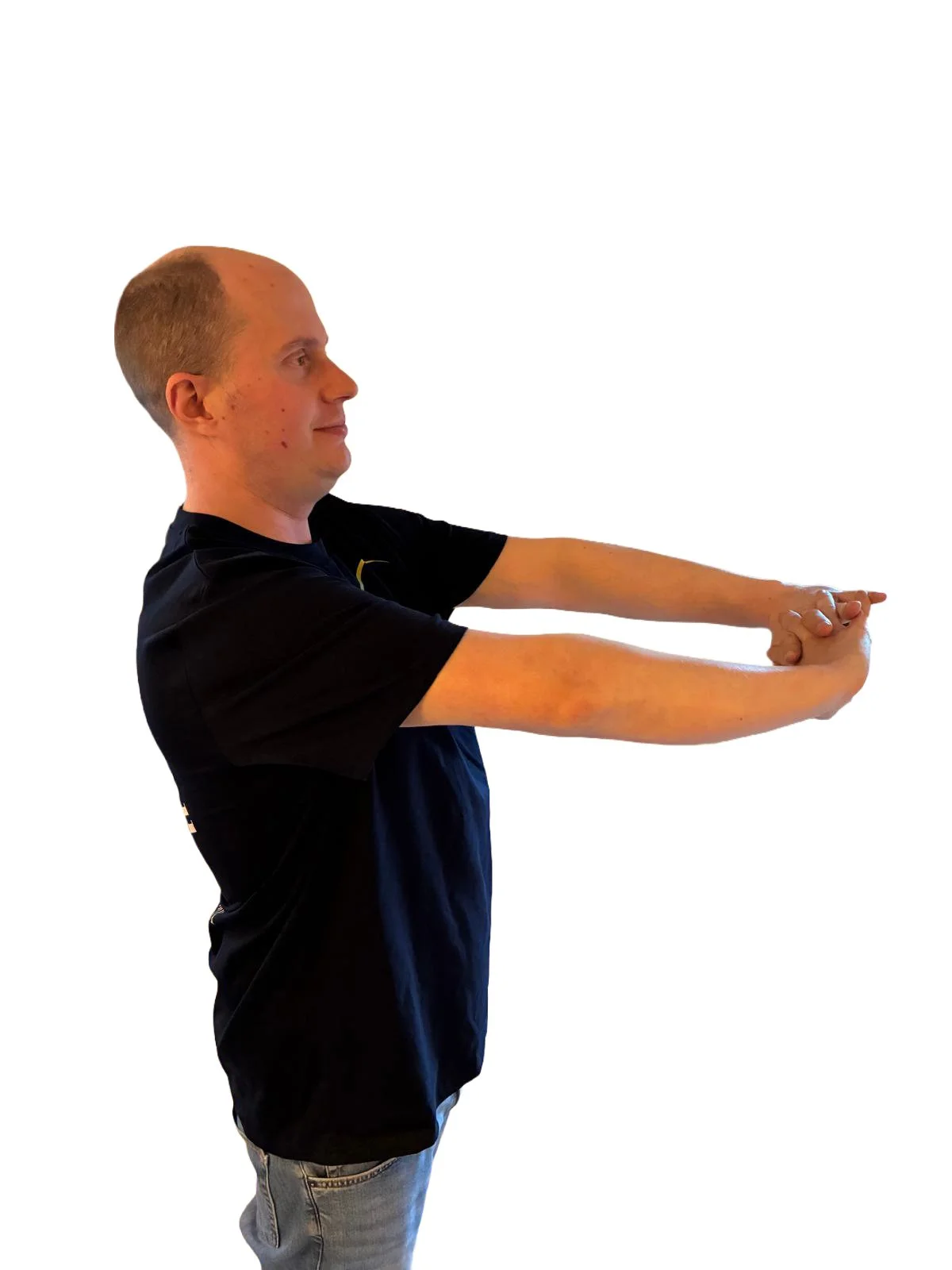
Rhomboid Stretch
Standing up, interlace your fingers and turn your hands so your palms are facing outwards as shown. Keep your neck in the same position and rotate your arms 20 degrees to oneside you should feel a stretch inbetween shoulder blades. Hold for 30 seconds to 1 minute, then do the same for the other side. Aim for a 3-4/10 stretch, do 2-3 repetitions.
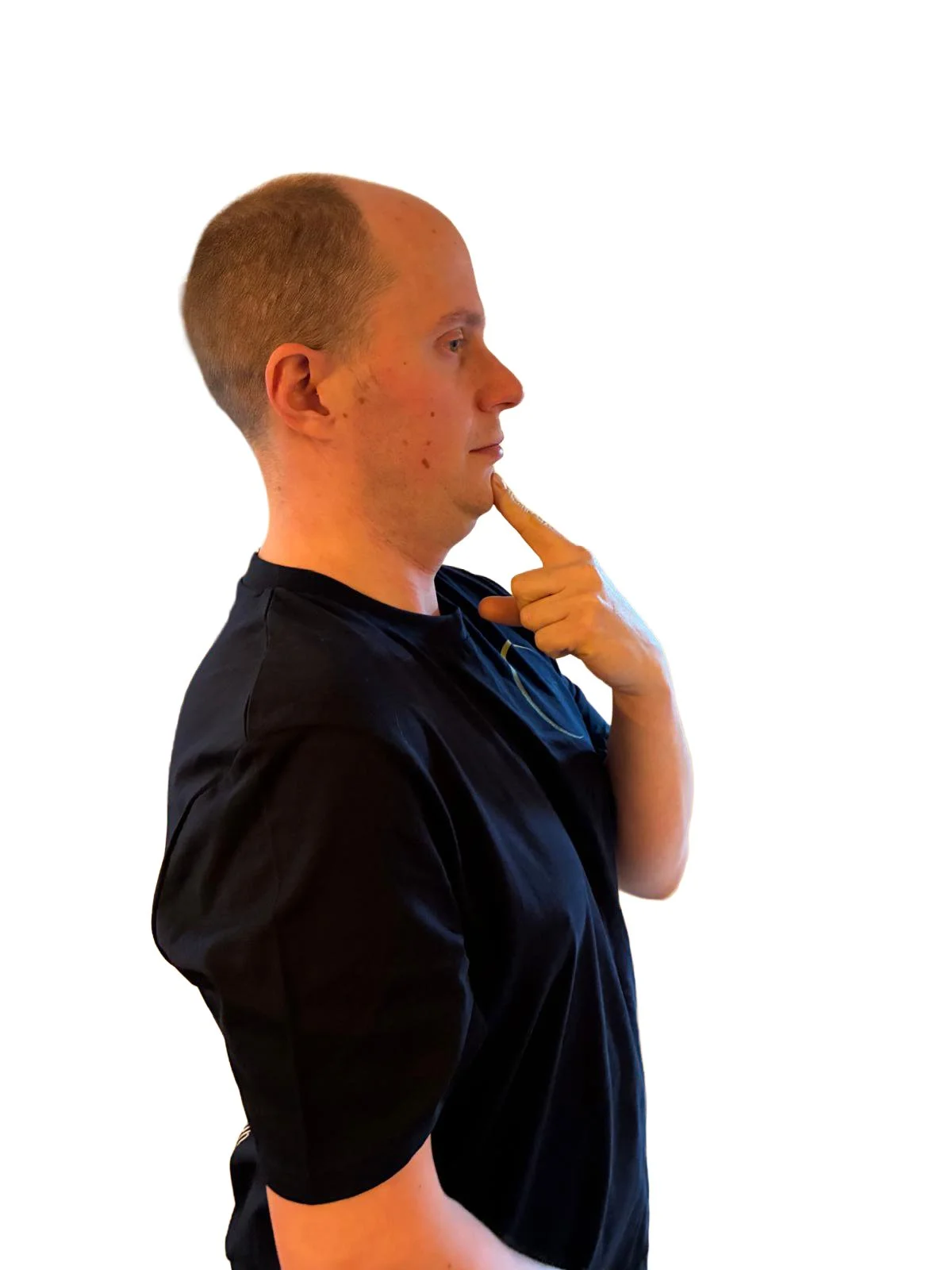
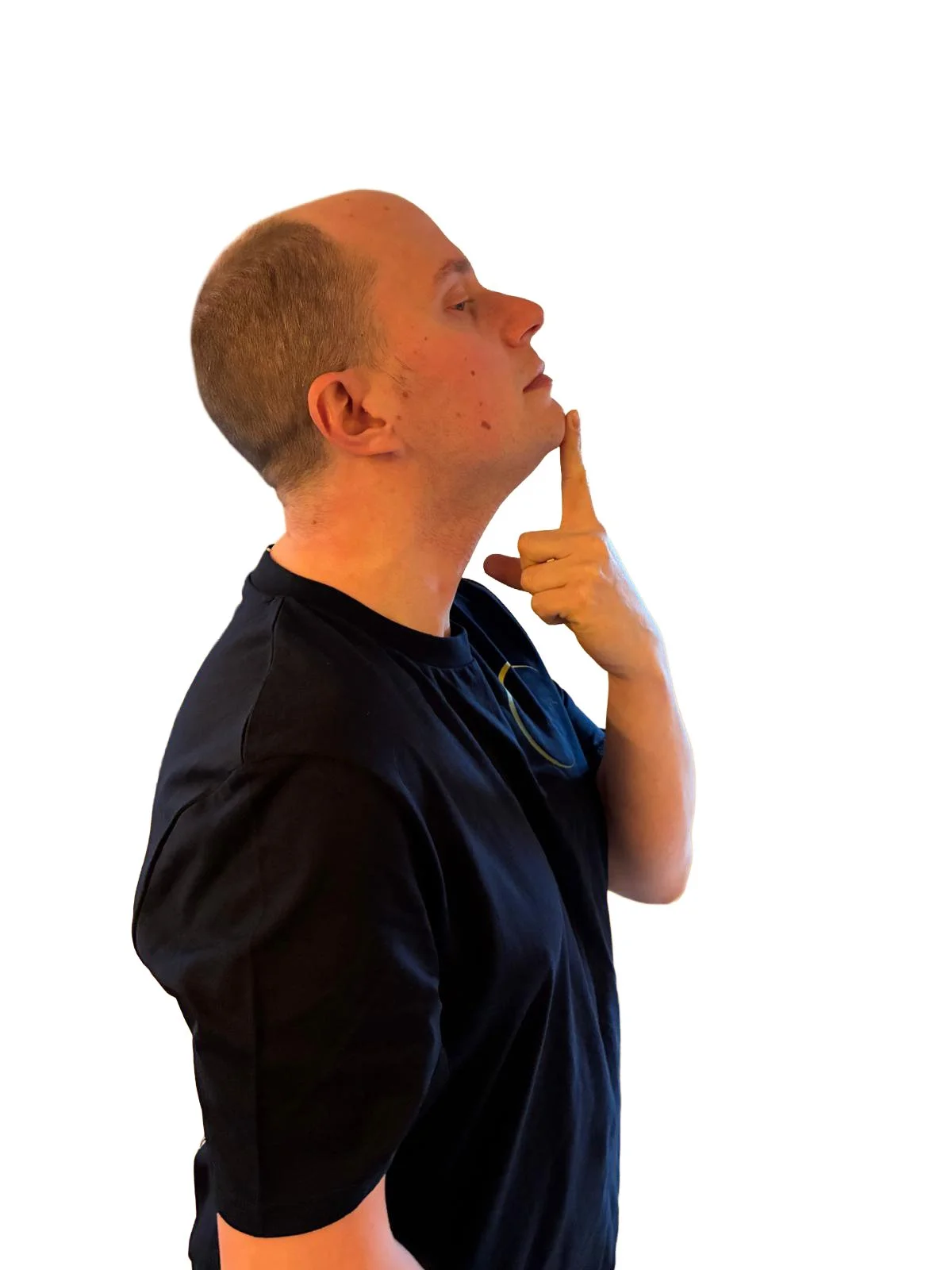
Subocciput Stretch
The suboccipital muscles are small muscles at the top of the neck, very often involved in headaches. They are small and delicate, so it’s important to start slowly. Place your index finger on your chin (apply no pressure), then stick your chin in keeping contact with your finger as far as is comfortable or until you feel a tension/stretch sensation in your upper neck. If you feel pain, stop just before that point. Then push your chin out against your finger as far as is comfortable, again, if you feel pain, stop just before that point. Repeat 3-4 times, start doing twice daily if you feel no pain or discomfort after a couple of days of doing that, then gradually increase repetitions 1-2 a day until you reach 15.
General Advice
Little and often wins over prolonged stretches, keep repetitions low and hold for 1 minute or so at the most each time. You want to stretch enough to affect the muscles and connective tissues without irritating them further. A couple of times a day is enough for these sorts of stretches; doing 5/6 or more times a day can often irritate things. It is about creating the environment that allows the pain sensitivity to decrease, not pushing or forcing anything to relax. If these exercises are working, you should notice a difference within 10 days to two weeks.
We hope you find these exercises and tips useful. If you feel you want/ need further advice or professional opinion, please book an appointment at our Baldock or Arlesey clinics.
Ben Adams Senior Lecturer and Clinical Tutor